Author: Rachels Nails

  • How To Dry Nails Fast – Quick Tips

    How To Dry Nails Fast – Quick Tips

    There is no better way to spend some relaxed time than to acquire or give yourself a beautiful manicure. Nothing beats a stylish set of nails, whether you’ve been eyeing numerous cosmetic trends or want to keep things simple with an everyday manicure.

    All of the pleasure, though, comes to an end when it’s time to dry your nails. You risk damaging your manicure if you don’t wait long enough. And, of course, with a hectic schedule, waiting too long is out of the question. So you’re probably wondering how to dry nails quickly. Look no further if you’re sick of dealing with a smeared manicure.

    We’ll show you how to dry nails fast, including some useful suggestions, in the section below. But first, let’s look at how long nail paint should take to dry.

    How long does it take for nails to dry completely?

    It’s time to address the age-old question: How long does nail polish take to dry? While it’s tempting to believe that your nails only require 10 to 15 minutes to dry, previous manicure sessions have proven that even after waiting, your nails might get smeared.

    The fact is that nail paint might take up to two hours to dry. And, while a few hours might feel like an eternity when you have a busy schedule, it’s critical to get your manicure to set quickly so you can get on with your day.

    Because the surface layer of your nails dries first, you may believe they dry faster than they actually do. You may softly touch your nails and feel them dry, only to ruin them a minute later when you use your hands for anything.

    This is due to the fact that your nails are only dry on the surface; the lacquer below is still wet and might be damaged, smeared, and so on.

    How to dry nails fast without making smeared 

    Are you ready to find out how to dry your nails quickly? Continue reading for four ideas on how to speed up the drying process and achieve a perfect manicure in no time.

    Using fast-drying nail polish

    Using fast-drying nail paint is one of the simplest techniques to help your manicure dry quickly. Fast-drying nail lacquer, unlike other nail paint formulations, works to dry and set your nails in a matter of minutes. There is no need for a lengthy drying time. With so many color and finish options available, you’re sure to discover the right polish for you.

    Paint thin nail layers

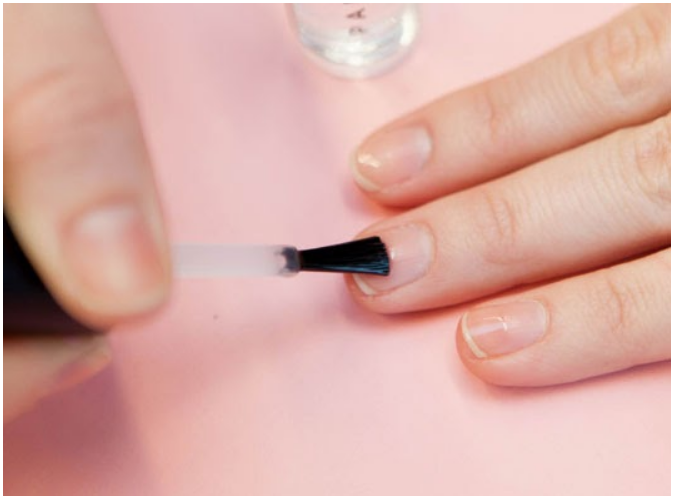
    Paint your nail paint on in light, thin layers, allowing each layer to dry between coats. Apply 2-3 thin, light coats of polish after wiping off a bit of polish from your applicator brush. Allow your polish to dry for 1-3 minutes between coats. If you apply numerous thick coats of nail polish, it will not dry fully.

    • It will take longer to apply the polish this way, but it will dry much faster.
    • Paint each nail one at a time, then repeat in the same sequence. If you take your time painting each nail, the first one will be ready for its second coat by the time you finish the last one.

    Hair dryer is also a very good option

    For a quick fix, use a blow dryer to blast cold air for 2-3 minutes. Connect your hairdryer and set it to the cold air setting. Then, for 2-3 minutes, run the cool air across your fingertips. The chilly air may cause your nails to dry rapidly.

    • Do this for both hands to fully dry each nail.
    • Before you begin, make sure the dryer is set to the low setting. To avoid harming the polish, hold the hairdryer 12 inches (30 cm) above your nails as you dry them.
    • Your nail paint may begin to bubble or ripple if you use a warm heat setting or hold the dryer too near.

    Immerse your fingertips in a basin of cold ice water

    Allow your nails to air dry for 60 seconds before filling a small basin halfway with extremely cold water. Then, add 2-5 ice cubes. Hold your fingertips in the icy water for 1-2 minutes before removing them from the dish. In general, cold hardens nail paint, so an ice bath is an excellent technique to get your nail polish to adhere.

    • When applying this method, use caution since it might damage your nail paint if you dip your hands in the water too quickly. The polish should be virtually dry at this point.
    • While this speeds up the drying time of your nail paint, it will make your hands incredibly freezing!

    Put your hands in the freezer

    As much as we dislike being cold, when it comes to our nails and the opportunity to not smudge them before they’re dry, we’re ready to go to any length. In this situation, it entails placing your hands in the freezer for a few minutes. The cold air will assist to harden the top coat of polish, allowing you not to be too cautious after having your manicure done.

    Spray your wet nails with an air duster

    An air duster is a blast of chilly, pressurized air that shoots out fast. Hold the can around 30-45cm away from your hands to keep them from getting too chilly. Your nails should be mostly dry after a quick 3-5 second spray over your fingertips. Because the air is chilly, this works great for drying nail paint. Make sure the sprayer is aimed towards your nails.

    • Before you spray your nails, make sure they’re mostly dry, since air duster might damage your nail paint. You may unintentionally harm the polish’s surface.
    • Air duster may be purchased at most office supply stores.

    To save time, try using drying drops or setting spray

    Are you ready to decrease your drying time in half without making a mess? It’s time to get to know quick-dry nail drops. This product not only dries your manicure quickly, but it also protects your nails from dents, smudges, and scratches. Some formulations are also effective at nourishing your cuticles and nails. Essentially, it is a must-have. All you have to do is dab one or two drops onto newly polished nails. Wait a minute or two for them to dry, and everything is ready to go!

    When it comes to avoiding messes, a nail polish drying spray is a wonderful option. You can depend on obtaining the perfect manicure with every usage because it is ideal for minimizing drying time. Simply wait a minute after painting your nails before spraying evenly over each nail with the can held a few inches away from your hands.

    • Nail drying treatments, such as sprays and drops, are available at many beauty supply and pharmacy stores.

    Frequently asked question about how to dry nails fast

    Q: Can I dry my nails in front of an air conditioner rather than a freezer?

    A: Yes, this will aid in the drying of your nails. Anything that helps your nails harden faster will help them cool faster.

    Q: Can I wash my hands in the sink with cold water?

    A: Cold water can assist, but make sure it isn’t a strong stream otherwise it can ruin your nail polish/varnish.

    Q: Is the ice water technique suitable for nail art?

    A: It is determined by the amount of nail art present. If there is only a small amount, it will dry properly. If there is a lot, it will either fail or take a very long time. However, if you use a fast-drying top coat, that will assist. In this instance, we propose that you use UV/LED light to dry your nails.

    Summary

    There is nothing more frustrating than spending a couple of hours sitting with your hands in front of you, trying to avoid touching things for fear of damaging your freshly painted nails. We hope that all the information that Rachel’s Nails has provided above may help you overcome this situation. How to dry nails fast is not that difficult.

    Every day, ensure that you have a fundamental understanding of nail care and protection. You can apply all of the nail care methods we listed above or come to our nail salon for nail care to get faster results. We may be found at 12a Norcot Road, Reading, UK, or online at https://rachelsnails.co.uk/.

    We believe that this article can help you to figure out the proper ways about how to dry your nails fast with easy tips.

  • How To Do Ombre Nails At Home, Easy Tutorials

    How To Do Ombre Nails At Home, Easy Tutorials

    Ombré nails (like ombré hair) are a style of manicure that creates a color gradient. A bright hue on the top of the nail fades into a darker color at the tip. It may take some time and effort to achieve the ideal ombré effect, but there is plenty of creativity to make your one-of-a-kind ombré effect nails. Here are 2 simple tutorials about how to do ombre nails at home.

    What are ombre nails?

    Ombre is a term derived from the French word “ombrer”. This is not the name of a certain color, but the concept of the change in shade, the intensity of a color, also known as a transition.

    In the past few years, ombre color has returned in hairdressing, makeup and trending techniques. Then spread to the Nail field. This is the beginning of one of the most popular nail trends today.

    Why are ombre nails becoming more trendy recently?

    More than just a color transition from dark to light, the ombre pattern in the nail really brings top-notch art to the nails.

    Creativity above all boundaries

    Instead of just using a boring background color, nail technicians can break all the rules to unleash their creativity and mix colors.

    Nail ombre gives the women a mysterious, enchanting and colorful look. Thanks to the unlimited color creativity, ombre nail styles are extremely diverse and constantly changing.

    Diversity of customers

    Nail ombre is suitable for all ages from young people to the elderly. Bright, eye-catching colors will be the perfect choice for young people.

    As for the elderly, deep colors will be preferred.

    Suitable for all situations

    Thanks to the simple design, the ombre nail is easy to combine with different outfits and accessories.

    Therefore, this nail style is often used by women in many different situations such as birthday parties, proms, weddings, etc.

    How to do ombre nails by using a sponge

    Step 1: Remove any extra cuticle.

    To begin, in order to have the most beautiful nails, we must trim the extra skin surrounding the nails. This not only prevents the paint from smearing out, but also makes the nails neater and more attractive. To remove any skin from your nail plate, use a cuticle stick.

    However, if you do it alone, it will be tough; you may ask someone else to assist you in cutting the cuticle, or if your hands do not have too much additional skin, you can avoid this step. When pressing and cutting it, take care not to bleed.

    Step 2: Shape and file your nails

    Decide how you want to shape your nails before cutting them. File the tip after trimming the usual nail style. Finally, smooth the nail surface with a polishing tool or nail file to complete the style. You may also make nails that are round, square, pointed, almond, or oval. Here is how to correctly file and shape your nails, according to our instructions.

    Step 3: A clear base coat should be applied first. 

    Apply a thin layer of clear base coat to all of your nails. A clear base coat protects your nails from staining from colored polishes and helps to extend the life of your manicure by reducing the occurrence of chips in your nail paint.

    Step 4: Start by applying your base color polish.

    The basic color for ombré nails is generally white polish or the lightest color you intend to use for the ombré effect. While a white polish will make colors appear more vivid, choosing the lightest of your intended ombré polishes will result in a softer, more delicate ombré look. Apply this color to all of your nails as a backdrop. Allow your nail base to dry completely for a few minutes before applying next layers.

    • Paint two coats of your base color to get an opaque base. Allow the first layer to thoroughly dry before applying the second.
    • It is preferable to apply two thin coats of lacquer to your nails rather than one thick and heavy layer of polish to assist them dry quickly.

    Step 5: Using a makeup sponge, apply your ombré colors. 

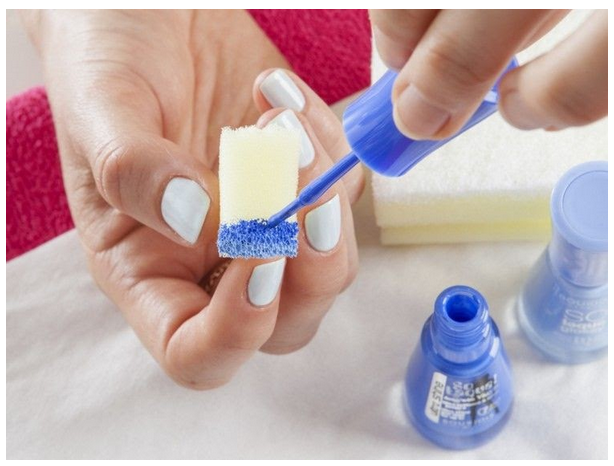
    Using a tiny makeup sponge, paint your ombré colors in straight, horizontal lines side by side. The area of the sponge that you paint with should be around the same width as your nail. Begin by drawing a line across the width of the sponge with the lightest nail polish color. Then, below the first color, paint with the next darkest color. Finally, apply the deepest polish color beneath the second line of polish. Make certain that all of the colors are painted adjacent to one other, with no visible sponge between them. For each color, apply a couple coats of polish on the sponge so that the polish is wet enough to print onto your nail.

    • The ombré effect is often created with two or three colors, but you may experiment with other colors and combinations to find what you like most.
    • It may help to wet the makeup sponge first before applying the colors. Fill the makeup sponge halfway with water. Wring out the sponge until about 80% of the water has been gone. Then, using the nail polish colors, paint on the nails.

    Step 6: Apply the polish to your nails using a stamping technique.

    Stamp the polish onto your nail by repeatedly pressing the sponge (with the polish side down) on top of your nail, taking the sponge away every couple of stamps to see if the ombré is dark enough and to your preference.

    Step 7: Apply the nail polish on your nails. 

    Roll the paint onto your nails by pressing the sponge’s side edge on the side of your nail. Gently slide the sponge (with the polish side down) across your nail to the opposite side. Repeat to deepen the polish colors and enhance the ombré effect.

    • This procedure will cause some nail paint to be transferred to the skin around your nails. To avoid this, apply a thin coating of petroleum jelly to the skin around your nails or apply tape to the skin around your nails. Otherwise, you can wipe the sides of your nails afterwards using nail paint remover.
    • There is a lot of flexibility in how you apply the color to your nail. To create your ombré effect unique and distinctive, modify the location of the sponge (stamping vertically on the length of your nail, tilting the sponge to particularly stamp on a specific hue).

    Step 8: Fill the sponge with nail polish. 

    After you’ve completed the ombré effect on one nail, refill the polish onto the sponge to keep the ombré colors moist and bright. Paint the nail polish colors in the same order as previously, starting with the lightest and working your way down to the darkest. Make sure that all of the polish colors are blending well with each other.

    • Keep in mind that if you try to ombré your nails with a sponge that isn’t sufficiently dampened with paint, the dry sponge will actually peel off your base color coat and damage your varnish.
    • If you stamp or roll your nails fast, you’ll probably only need to add polish to the sponge every other nail.

    Step 9: Finish with a topcoat. 

    After you’ve given all of your nails enough time to dry (approximately 10-15 minutes), apply a top layer of clear polish to them. Because sponging creates a stippled and rough appearance on your nails, you may want to apply two layers of top coat to smooth them out.

    Step 10: Make sure the skin around your nails is clean. 

    Swipe a tiny paintbrush or Q-Tip soaked in nail polish remover around your nails’ edges and cuticles.

    • The cotton on the Q-Tip will aid in the removal of polish from the skin, whilst the paintbrush will be more precise in removing extra nail polish.

    How to do ombre nails by using a nail brush

    The first 3 steps are the same as when you do ombre nails by using a sponge.

    Step 4: Apply the 2 colors polish

    If you’re going straight to your natural nails, start by applying and curing your base coat; if you’re using extensions, jump right to the color. Apply your first color shade from the base of your nail to about halfway up the nail. Then, take your lighter polish and apply it to the remaining half of the nail, carefully pushing the deep color up to meet the light polish.

    Step 5: Blend the colors together

    Take your nail brush with you. To get this look, use a brush with thin, wispy hairs to create the perfect faded appearance; ombré brushes are available for purchase for this reason. To begin blending the colors together, carefully tap the transition line between the two tones with the brush. Cure this layer with your UV or LED lamp. To get the ideal, gradual ombré look, repeat the previous process, applying your two colors and softly pressing your brush from side to side.

    Step 6: Apply a transparent layer and top coat

    Use a slightly more translucent paint to apply another layer on your nail. After applying and curing, paint the top coat to make sure that everything stays in place.

    Frequently asked question about how to do ombre nails

    Q: Can I do ombre nails with regular polish?

    A: Of course! We recommend you use regular polish with the sponging technique but gel polish when using the nail brush.

    Q: How can I remove the extra nail polish off my skin?

    A: Once your nails are dried, wash it off. You may need to massage a little. You could also soak a q-tip in nail polish remover and wipe away the excess nail polish.

    Q: Where can I get a sponge like the one in this article?

    A: The sponge they’re using here is a cosmetics sponge (or cosmetic wedge), which you can find anywhere beauty products are sold. Some dollar/pound stores could have these too. You may use any sponge, although ones with air bubbles will provide a less smooth finish.

    Summary

    Going to a nail salon is comparable to doing ombre nails at home. You should have a pleasant time doing this if you have the right equipment and the patience to learn.

    Because each of the steps we listed is essential, you should finish them all without skipping any of them. If getting your ombre nails done is too difficult, you can come to Rachel’s Nails for it. We apply ombre nails with professional polish and specific equipment, and then apply a nail treatment coating on top of your nails. Rachel’s Nails offers not only manicures but also pedicures and cosmetic treatments.

    Every time you visit our nail salon, you will be served by expert nail technicians. We want to make sure that when consumers visit Rachel’s Nails salon, they get the best experience possible. Everyone can afford our prices. Aside from that, we provide high-quality products and services. We are located at 12a Norcot Road, Reading, UK. Here is our website https://rachelsnails.co.uk/ and you can read our blogs to get more information about nails.

    We hope that you find this article helpful and you can follow the tutorial about how to do ombre nails at home quick and easy.

  • How To Do Gel Nails At Home – Simple Tutorials For Everyone

    How To Do Gel Nails At Home – Simple Tutorials For Everyone

    When you apply gel nails, you get the strength of artificial nails with the look of natural nails. When you apply gel nails, you do not encounter the harsh fumes that you get when you apply acrylics. Under UV light, the gel hardens. Each layer must solidify for two to three minutes under this light. This forms a chemical connection between the gel and your nail.

    Prepare tools to learn how to do gel polish at home

    Gel polish will help your nails to have the same durability as using acrylic paint while still looking very natural. Moreover, when applying gel nail polish, you will avoid the strong smell of acrylic paint. That’s why many people prefer gel polish nowadays. To get started on how to do gel polish at home, you need to prepare some of the following necessary tools:

    The basic gel polish set includes: primer, gel polish, top coat polish, then choose the color you like the most. Here are some tips on choosing the paint color that we want to show you in order to have the right color: with neutral skin color (light skin color or yellow skin), it is quite easy to choose because it suits most paint colors, but if you have dark skin, you should choose colors in light tones.

    Nail file and nail clippers

    Nail file, clippers are essential steps in performing a DIY manicure. Most of the time, the surface of your nails isn’t smooth enough to go without one. A nail file’s aim is to prepare your nails to adhere to gel polish not just adequately, but also for a longer period of time. Nail clippers are used for trimming your nails in order that you can get proper nail shape.

    How To Do Gel Nails At Home - Simple Tutorials For Everyone

    Q-tips, gel polish remover or acetone to clean excess polish

    In the process of getting your nails done at home, you may have some unexpected problems such as having excess polish on your skin. So Q-tips and acetone are good solutions for these.

    UV lamp to dry paint

    You will be unable to cure your gel nails without a curing lamp that produces UV radiation. It is possible to cure your DIY gel paint manicure naturally by sunning your nails and taking advantage of the sun’s UV rays, but it is not the most efficient technique because you would have to wait for the weather to be favorable. In this case, a UV lamp or LED curing lamp is the best option. However, we recommend using an LED curing lamp because it emits less UV light and dries the gel polish the fastest.

    Now let’s start with the gel polish process. 

    We believe that after reading this article, you will understand how to have the very standard, beautiful gel polish that is no different from going to get your nails done in a salon.

    Step 1: Cut excess cuticle

    First of all, in order to have the most beautiful nails, we need to cut the excess skin around the nails, this helps the paint not to be easily smeared out, but also helps the nails to be neater and more beautiful. You can use a cuticle stick to push any skin away from your nail plate.

    However, if you do it yourself, it will be a bit difficult, you can ask someone else to help cut the cuticle, or your hands do not have too much excess skin, you can skip this step. Be careful not to bleed when pushing and trimming it.

    Step 2: File and shape your nails

    Before cutting your nails, decide how you want to shape the nail. Trim the regular nail style and then file the tip. Finally, complete the styling by smoothing the nail surface with a polishing tool or nail file. You can also create round, square, pointed, almond or oval nails. Here is our instruction about how to file and shape your nails properly.

    Step 3: Apply a layer of primer on the nail surface

    This is an important step to help protect the nail and create a better bond with the gel polish. You know, nail polish often contains chemicals, this step will help protect nails from the chemicals from gel paint.

    Before proceeding, you often shake the primer paint bottle well, then take a little of it and apply a thin layer on your fingers. Apply your base coat in a very thin layer to your nails. Gel is applied in a much thinner layer than regular nail polish. When applying your base layer, take care not to get the gel on your fingertips.

    Allow your base layer to dry under the UV lamps for 20-30 seconds, twice as long as the manufacturer recommends. This is enough for the primer to dry.

    Step 4: Paint 2 thin layers of color

    When the base paint is completely dry, let’s start painting. Just like the base paint, before painting, shake the bottle of gel polish of the color you chose previously. 2 thin layers of the color gel should be applied. It will most likely appear streaky, but this is typical for the initial layer. Make careful to paint over the tip of your nail as well as the surface with these colorful layers. This prevents the gel from curling back off your nail.

    Step 5: Paint the top coat

    Applying the top coat guarantees that the cover you’re about to apply preserves all of your nail work. While gently sealing your nail tips, apply a small coating of the top coat over the colored gel paint. It’s a simple tip for extending the life of your nail polish. After that, smooth the layer over and cure using the LED cure lamp you previously used.

    Step 6: Take off the tacky. 

    After curing the top gel, some gel techniques leave a tacky, sticky coating on and around your nails. If this is the case, just wipe the tacky using a cotton ball soaked in acetone or nail remover. To finish your gel manicure, massage a cuticle oil into the area at the base of your nail. If your gel nails get dull after a few days, use a buffer to smooth out the top layer of clear coat, then clean your nails and reapply another clear top coat to restore the shine.

    How to remove gel nails after

    Step 1: Remove the top layer using a file. 

    To remove your gel nails, first file away the top layer of the gel. This will dull the sheen. Only once the shine has been gone can you proceed with removing the gel.

    • Avoid removing the polish off your nails. This might remove layers of your nail, leaving them brittle and dry.

    Step 2: Soak your cotton ball in acetone or nail remover solution

    If you do not use acetone or nail remover, the gel will not come off. Acetone is classified into two types: normal-concentration acetone and super-concentrated acetone. We’re talking about the ultra-concentrated version here. Take ten cotton balls and soak them in acetone. Cotton balls should be large enough to cover the entire nail.

    • Because acetone is a strong chemical, use caution while working with it. Also, bear in mind that acetone is highly drying to your nails, so they may get brittle as a result. The obvious disadvantage of this method is that your skin might get red, dry, and damaged more readily than with normal acetone, at the price of time.
    • If speed is important, 100 percent acetone is the best option since it dissolves gel nail polish in half the time of ordinary acetone nail paint remover.

    Step 3: Wrap a piece of tin foil over your fingertips. 

    Place one of the cotton balls on your nail, covering it completely. Wrap the nail and the tip of your finger with tin foil while the cotton ball is still in place. Apply this to the rest of your nails.

    • It is best to perform this with one hand at a time. Wrapping the second hand with foil-covered fingers is quite tough.

    Step 4: Remain them for a few minutes before removing one at a time. 

    Allow the foil to remain wrapped for 15 minutes. Keep it tight and don’t try to open it to see whether it’s functioning. Remove the wrapping one nail at a time after 15 minutes. The gel will have begun to flake away. Push the gel off your nail using a cuticle stick.

    • If you can’t get rid of the gel, just by using the cuticle stick or re-wrap your nails with an acetone-soaked cotton ball and foil. Allow for another 15 minutes before attempting again.

    Step 5: Finally, apply cuticle oil. 

    You should finish with cuticle oil once more. Cuticle oil should be massaged into the area surrounding the base of your nails.

    Apply cuticle oil to the surface of your nails and buff them with a nail buffer if they are tough.

    Frequently asked question about how to do gel nails at home

    Q: Do I lightly rub to remove the sticky coating of gel builder between layers of gel?

    A: You do not need to remove the gel polish before applying the top coat. You should only remove it once you’ve done the manicure and applied the coating.

    Q: How long do gel nails last?

    A: They should stay on for around three weeks, depending on the quality of the labor put into the nails or the quality of the materials utilized. Some gel nails can last up to three weeks, but you can’t really guarantee more than two. It also depends on the length of your nails and what you do on a daily basis, such as cleaning or dishwashing, whether they chip or peel off.

    Summary

    Doing gel nails at home is similar to going to a nail salon. As long as you have the proper equipment and the patience to learn, you should have a good time doing this.

    Because each step we stated is critical, you should complete all of them without missing any of them. Once again, the greatest gel polish shines through. We have fantastic alternatives for your at-home gel nail manicure, so don’t forget to check out our gel polish collections.

    We hope that you find this article helpful and you can follow the tutorial about how to do gel nails at home quick and easy.

  • How To Take Off Fake Nails: 2 Easy Ways That Everyone Can Do

    How To Take Off Fake Nails: 2 Easy Ways That Everyone Can Do

    False nails look wonderful, but they might be difficult to remove if you haven’t done it before. You may either go to a salon or do it yourself at home to remove the nail adhesive. After soaking your nails in soapy water, carefully file them off if you have glue-on nails or tips.

    Then, using a nail buffer and acetone, remove any remaining adhesive. To glued-on nails, just use acetone and file away any leftover gluey residue. After that, you’ll have natural nails that are strong and healthy.

    How To Take Off Fake Nails: 2 Easy Ways That Everyone Can Do

    How to take off fake nails without using acetone

    Soak your nails for 15 minutes in warm, soapy water. Fill a bowl or sink basin halfway with warm water and a little amount of mild hand soap. Place your hands in the bowl or basin so that your glue-on nails are completely immersed, and let them there for about 15 minutes.

    Soap and water will seep into the nail adhesive and soften it, making the nails simpler to remove.

    To soften the glue, soak your nails in a little pure acetone, but keep in mind that acetone is considerably harder on your skin, nails, and cuticles than soap and water.

    Alternatively, soften your nail adhesive by smearing a few drops of cuticle oil on each fake nail and allowing it to soak in for a few seconds.

    Once the adhesive has loosened, gently pry the artificial nails off. Look for a location where the nail has already begun to detach and gently pull the nail out from there. If you can’t find a loose area, gently work the tip of a nail file beneath the fake nail’s edges to loosen it.

    If the nail does not come out easily, do not try to rip it off. If you need to soften the glue a few more minutes, soak the nail in soapy water for a few minutes longer.

    Excess glued nails should be gently filed away using a nail buffer. Once the artificial nails have been removed and your natural nails have dried slightly, use the “buff” side of a nail buffer block to buff away the majority of the adhesive. When you’re confident that you’ve eliminated the majority of the adhesive, rinse the powder away with water.

    After buffing your nails, you may use the “shine” side of the buffer to polish them.

    Using acetone, remove any residual glue. To remove any remaining traces of nail glue, soak a cotton ball in acetone and massage it on each fingernail. Wash your hands with soap and water to remove any acetone residue from your hands and nails.

    Apply a little amount of nail moisturizer or cuticle oil if your nails feel dry after rubbing them with acetone.

    How to take off fake nails with an acetone soak

    Cut your fake nails as short as possible. Acrylic nails are composed of materials that attach directly to your natural nails rather than being glued on. Trim the artificial nails to a short but comfortable length using a pair of nail scissors or clippers, taking care not to cut any of your real nails. Because there would be less debris to dissolve, the remainder of the removal process will be sped up.

    Trimming down into your nail bed will be unpleasant.

    This method is applicable to both SNS (dipping powder nails) and acrylic nails.

    Remove the fake nail’s shiny surface using a file. If the artificial nails are still connected to your natural nails, remove the glossy surface using a nail file. Back and forth across your nails with the file until the shiny sheen is gone and the nails look matte. Make an effort to massage each area of the nail equally. This will expedite and improve the removal procedure.

    Stop filing that place if you notice any of your natural nails showing through under the artificial nails. You risk harming your natural nails if you continue to file.

    Wipe any dust away with a clean, dry cloth or cotton pad. A microfiber cloth is a cheap and effective alternative, but any clean cloth will do. Remove any dust from your nails to allow the acetone to more easily penetrate the leftover acrylic.

    Apply petroleum jelly or oil cuticles to the area of skin surrounding your nails. This will shield your skin from the acetone. Apply a small coating to your nail beds as well as the skin underneath and around your nails.

    Apply petroleum jelly or oil cuticles if you have dry or sensitive skin.

    Wrap a cotton ball soaked in acetone around each nail on one hand. If you have acetone in a dripper container, carefully squeeze it onto the cotton pads. If the acetone is in a normal container, pour it into a small disposable dish before dipping the cotton pads into it. Each wet cotton pad should be placed over one of your nails.

    Cotton balls can be used instead of cotton pads if you don’t have any.

    Acetone and cotton pads can be purchased at a pharmacy or a supermarket. If you have sensitive skin, use an acetone-based nail paint remover that is specially formulated for it.

    Acetone fumes may be hazardous, therefore always use it in well-ventilated places.

    Wrap an aluminum foil strip around each nail and cotton pad. Tear out a piece of aluminum foil about 1 inch (2.5 cm) by 2 inches (5.1 cm). Make sure the cotton pad is in place before wrapping the foil around the nail and cotton pad.

    The metal foil will help to retain heat and moisture, preventing the acetone from evaporating before the glue has a chance to soften. This expedites the removal procedure.

    Repeat the technique for all of the nails on one hand before moving on to the other. If you find it difficult to work on your opposite hand while your other hand is still soaking, look for the assistance of a friend or wait until the foil and cotton pads have been removed before attempting to begin the second hand.

    After 20 minutes, remove the foil and pads. Set a timer for 20 minutes and allow the acetone to do its thing. Remove the cotton pads from the foil that has been wrapped around your nails. You should see that the adhesive has dissolved and the fake nails have softened.

    Leave the foil and pads on for another 15 minutes if the first nail is still coated in adhesive or the artificial nails are still securely in place.

    Avoid putting used acetone pads on wooden or plastic surfaces because the chemicals will harm the surface.

    With a tea towel, remove the spongy fake nails. Clean the dissolved debris from the fake nails with a clean dish towel. Apply pressure to the tea towel when cleaning the nails, but stop if your natural nails begin to hurt.

    If the fake nails do not come out easily, replace the acetone-soaked cotton balls and foil.

    Buff away any extra glue or paint with a nail file. Don’t be concerned about filing your entire nail. Instead, concentrate on the places where there are glue residues. You don’t want to file your natural nails, so try not to push too hard.

    A nail file may be purchased from a drugstore. It’s worth noting that some retailers will refer to them as nail buffers.

    How to treat your nails after taking off fake nails

    Hands should be washed with warm, soapy water. If you leave acetone on your skin, it will dry it out, so wash it off with warm water and natural soap. A natural soap will aid in the retention of your skin’s natural oils.

    If you just have normal soap at home, use that.

    Removing nail adhesive from your nails might cause your hands to get dry. To restore the natural moisture of your nails, cuticles, and hands, rub natural oil freely over them.

    Natural nail moisturizers such as almond oil and olive oil are effective. These may be purchased from a natural health and beauty store or a drugstore.

    Allow your nails to rest in between manicures. If you often use artificial nails, your real nails will benefit from a rest between treatments. After removing the fake nails, let your natural nails a few days to a week to heal before applying new false nails or paint.

    Try taking a week off between manicures every 8 weeks.

    Consider putting fake nails without adhesive the next time to see if it works better for you than having to remove nail glue.

    Frequently asked questions about how to take off fake nails

    Q: How do you get rid of remaining nail glue?

    A: Clumps of nail adhesive can be removed by buffing. Acetone can be used to eliminate small quantities of residue.

    Q: If I don’t want to use acetone, how can I remove the glue off my nails?

    A: If you don’t want to soak your nail tips in acetone, you can carefully file the glued-nails away.

    Q: No matter how hard I try, I can’t get my artificial nails off, and I’m too busy to go to a nail parlor. What am I supposed to do?

    A: Apply pure acetone to cotton balls, apply a wet cotton ball to the nail, and press it firmly against the acrylic, on the area where it has stuck to your natural nail, using tin foil to keep it in place (this prevents you from having to handle the acetone a lot). Use tin foil to retain an acetone-soaked cotton ball or two on each nail while the acetone eats away at the acrylic nail and adhesive. If you can not do it by yourself at home, you should go to the nail salon so that the manicurists can help you with this process.

    Summary

    That’s all there is to it when it comes to how to take off fake nails easily at home.

    If taking off fake nails is too difficult, you can come to Rachel’s Nails for the removal. We remove false with professional acetone and specific equipment, and then apply a nail treatment coating on top of your nails. Rachel’s Nails offers not only manicures but also pedicures and cosmetic treatments. Every time you visit our nail salon, you will be served by expert nail technicians. We want to make sure that when consumers visit Rachel’s Nails salon, they get the best experience possible. Everyone can afford our prices. Aside from that, we provide high-quality products and services. We are located at 12a Norcot Road, Reading, UK. Here is our website https://rachelsnails.co.uk/ and you can read our blogs to get more information about nails.

    It is quite simple to remove fake nails at home; all you need are the right equipment and to follow the step-by-step instructions. If any unforeseen difficulties arise, please feel free to visit our nail salon or the nearest health facility for assistance.

    We hope you may find a suitable method about how to take off fake nails safely and conveniently at home.


  • How To Grow Your Nails Strong And Long

    How To Grow Your Nails Strong And Long

    The process of growing long and strong nails is a multi-step one. You may grow your nails to any length you choose as long as you take excellent care of them. You should begin by eliminating unhealthy nail habits. Following that, taking the right vitamins and correctly manicuring your nails can help you answer the question: how to grow your nails?

    Getting Rid of Bad Habits

    Stop biting your nails.

    Biting your nails is bad for your health. Although it is a common anxious behavior for many people, it can result in bacterial skin infections on your hands and in your mouth. If you have dry or flaky skin around your nail beds, clip it away rather than bite it off. Here is our article about how to stop biting your nails.

    • Try keeping your nails nicely manicured or applying nail art to make you less likely to bite.
    • When you’re bored, chew gum. If you don’t have any gum, try to play a tiny ball, smartphone or do something else.
    • You should not bite the skin surrounding your nails. You may persuade yourself that by simply chewing the skin surrounding your nails, you are not causing any harm to the nail. This is untrue; the extra moisture from saliva will only weaken your nails and make them more prone to breaking.
    • Pick one nail a week that you will not bite. To wean yourself off the habit, gradually add more “no-bite” nails.
    • If your nail biting is severe, talk to a therapist about your anxiety or another issue that may be driving you to bite your nails.

    Wearing acrylics and gels is no longer necessary. 

    When acrylic or gel nails are removed too quickly, they become dry, brittle, and unlikely to grow again. Because it happens with moist nail-beds, even effective removal might cause harm to your nails. Your nail beds are most sensitive when they are moist.

    • If you choose to obtain gel or artificial nails, alternate between the two. In between gel or acrylic manicures, get a classic manicure.

    Stop picking at your cracked nail paint. 

    Picking at your polish typically results in the removal of the top layer of your nail bed. This creates a shaky base for your nails.

    Stop ignoring base and top coats. 

    When you’re in a rush and want your polish to dry quickly, it’s tempting to forgo base and top coats. However, if you skip these, you will damage your nails. They prevent your nails from discoloration and help the polish cling to your nails, resulting in less chipping. If it chips less, you’re less inclined to pick at it and harm your nails more.

    Stop utilizing your nails as a tool. 

    Peeling labels, scraping wax, or unfastening a key ring can all easily harm or break your nails. You may not even be aware that you are doing it, but if you want to maintain good and strong nails, you must begin to notice. Also, avoid immersing your nails in water for too long. This might soften the nail, causing it to become weak and flexible.

    • Slowing down is the greatest method to put a halt to this. Have scissors or another tool on hand to help you open, scrape, or peel anything you need during the day. Avoid doing anything that might cause your nail to flex. To avoid chewing your nails, keep clear nail painton them.

    Getting nail-growing nutrients.

    Take lots of Vitamin H. (biotin). 

    Biotin helps to develop and strengthen the nails, hair, and skin. Aim for 30 to 40 micrograms per day, either through diet or supplements. Biotin is high in whole grains, mushrooms, bananas, salmon, and avocado.

    Consume folic acid-containing foods. 

    Folic acid, often known as Vitamin B9, protects your nerve cells and maintains your red blood cells healthy. It is the finest vitamin for nail development, and it is difficult to consume too much because your body excretes excess naturally. Folic acid levels are high in fish, red meat, cheese, and fortified soy products.

    Get vitamin A. 

    Vitamin A will aid in the strengthening of your nails. The daily suggested dosage is 700 to 900 micrograms per day. Vitamin A is plentiful in sweet potatoes, carrots, squash, and leafy greens.

    Consume lots of vitamin C. 

    Vitamin C is best recognized for its immune-boosting properties. This indicates that it aids in the recuperation of the body. This recovery aids in the growth and strength of the nails. Vitamin C is rich in oranges, kale, strawberries, and bell peppers.

    Get manicure properly

    Shape and care for your nail base.

    You must begin with a suitable basis if you want to grow your nails long and strong. To begin, you must have clean and healthy nails. Keep your cuticles clipped and file them into shape.

    • They must be properly filed. Begin from the outside edge and work your way toward the middle. Your nails will become weaker if you go back and forth in a repeated motion.

    Take good care of your cuticles. 

    To soften your cuticles, soak your nails in warm water for 5 minutes. Do this up to four times each week. To remove the dead cuticle skin, use a cuticle remover to your nails and press the dead skin back with a cuticle stick. Rinse the remover and dirt away (Recommended to do once a month).

    • After pulling your cuticles back, apply hyaluronic acid to and around them for enhanced cuticle health.
    • Maintain your nails’ moisture levels. Using a moisturizer around your cuticles will help you avoid hangnails and damaged nails.

    Strengthening therapies should be used. 

    There are a variety of strengthening therapies available. Apply the one that matches your budget and schedule once you’ve formed a suitable base and properly cared for your cuticles.

    • Serums are costly, but they frequently offer the quickest and greatest effects in nail strengthening.
    • Creams are ideal for daily usage. Intensive protein treatments are available in the form of a cream that you apply to your nails in the morning and before going to bed at night.
    • The use of a strengthening polish will assist to protect your nails from peeling. It is incredibly inexpensive and simple to use.
    • To protect your nails, apply base or top coats and nail hardeners.
    • Keep in mind that using nail hardeners or anything similar increases the chances of your nails snapping or cracking, which may be unpleasant.

    Homemade remedies to grow your nails 

    Lemon juice

    Lemon juice may assist to lighten and eliminate stains from your nails, and the vitamin C encourages stronger growth. Allow to dry after swiping lemon juice over each nail with a cotton swab. A slice of lemon might also be used straight on the nail. Do this twice a week, then apply a thick moisturizer.

    You may also combine a few drops of lemon juice with 2 tablespoons of olive oil in a cup and microwave for 15 seconds until warm to make a nail mask that can be massaged into your nails and left for 30 minutes, or overnight if possible, for optimum effect.

    Coconut oil 

    Coconut oil is extremely moisturizing and can help strengthen and soften your nails and cuticles. It also has anti-fungal qualities, which is helpful if you have a tendency to have nail infections.

    Warm coconut oil in the microwave for 20 seconds and massage into the cuticles before going to bed for a nutritious treatment. Wear a pair of thin cotton gloves overnight to keep in the treatment.

    Garlic oil

    Garlic contains selenium, which promotes nail development. You may either massage your fingernails with sliced garlic or, if that is too strong for you, create your own garlic oil to use as a nail mask.

    To make this, sauté chopped or minced garlic in a skillet with olive oil for 10 minutes, being careful not to let the oil boil or smoke. Allow the oil to cool before straining it into a glass container, removing the garlic bits. Every night, rub this oil into your nails and cuticles before washing off in the morning. Keep in mind that massage increases blood flow, which aids in the delivery of nutrients from your bloodstream to your nails.

    Honey 

    Honey can help maintain your nails and cuticles healthy and supple by preventing bacterial and fungal development. Combine the moisturizing qualities of honey with those of lemon juice to make a honey and lemon nail mask by combining 2 teaspoons of honey with a few drops of lemon juice and rubbing into your nails for 15-20 minutes. Rinse well, and you should have brighter nails, softer cuticles, and stronger nails over time if used frequently.

    Frequently asked questions about how to grow nails

    Q: What causes my fingernails to be brittle?

    A: The use of gel or acrylic nail polish might cause your nails to become brittle. You may also weaken them by immersing them in water or exposing them to dish soap.

    Q: Can a balanced diet and vitamins aid in the treatment of dry and brittle nails?

    A: Daily biotin supplementation can be beneficial. Taking an oral silicone supplement might also aid in the strengthening of your nails. Also, make sure you’re getting enough protein. Nails are composed of a protein-like substance called keratin, therefore it’s important that you obtain enough protein in your diet.

    Q: How to grow your nails faster?

    A: As we mentioned above, having a healthy diet, using nail treatments and doing some remedies at home to have best results. Be patient, good things take time.

    Summary

    Your nails are an indicator of your general health. If you want strong, fast-growing, healthy nails, you must eat a healthy diet. This includes eating a well-balanced diet rich in fresh fruits and vegetables, lean protein sources, adequate carbohydrates, and healthy fats.

    However, occasionally nails require a little assistance in becoming healthier and stronger. This is when home remedies might come in handy. Remember, you can’t make your nails grow quicker on their own. However, if you care for them, they will grow stronger and last longer, making them less prone to fracture.

    We hope this article can give you some solutions for the problem: how to grow your nails fast and easy. Take everything into consideration before doing it because everything takes time including growing your nails.

  • How Long Do Acrylic Nails Last ?

    How Long Do Acrylic Nails Last ?

    How long do acrylic nails last? Generally, you may wear them for up to three months without harming your fingernails if you care for them correctly.

    If you need assistance with taking care of your acrylic nails, you’re in luck because we’ve got some great suggestions for keeping your acrylic tips. Keep reading our  But, before we get to the advice, let’s go through what these nails are.

    What Exactly Are Acrylic Nails?

    These are artificial nails composed of a powdered polymer and a liquid monomer. These two components combine to form a dough-like ball that is bonded to your fingernail and then molded into whatever shape you choose. The majority of individuals use them to fill up damaged or bitten nails, but many more use them as nail extensions.

    Acrylic nails are typically safe to wear as long as they are well-maintained and kept healthy, but they may also serve as a breeding ground for skin infections if you are not careful with them.

    How long do acrylic nails last?

    A question many women have when applying nail polish is how long nail powder will last. Actually, this is a question with no definite answer. Because the durability of the nails will depend a lot on your aftercare and the skill of the manicurist.

    Durability is ensured by a professional nail technician.

    If the acrylic nails were done by a skilled nail technician, the customer should have the longest-lasting nails possible.

    Instead of nail polish, the nail technician might put a gel layer on top of the artificial nails. The gel provides the nails a more beautiful appearance and lasts longer than nail polish. With the gel coating, your acrylic nails should last longer.

    Clients have an impact on how long acrylic nails last.

    Acrylic nails are a long-lasting, long-lasting alternative to conventional lacquer manicures. A complete set of acrylics should last between six and eight weeks.

    The natural nails of your client grow. Even if your client’s acrylic does not crack or break, a fill-in visit is required.

    Besides, the quality of the nail powder layer will also directly affect the durability of the nail. If the manicurist is skilled and the quality of the powder is good, the retention time will be longer.

    Normally, the average time to keep powder in the nail falls between 10 and 15 days. If you can take better care, this time can be extended by a few days.

    After you’ve done your nails, your nail technician will show you a few things to keep in mind for your nails. Follow the advice of experts. At that time, your nail powder will be kept for a long time.

    How To Make Your Acrylic Nails Last Longer

    Customers regularly have no idea how to care for their nails and then criticize the product or the nail technician. It is your responsibility to educate your clientele.

    Here are some suggestions on how to care for your client’s nails so that her acrylic nails last longer.

    • Conduct Research

    If you want the greatest acrylic nails possible, you should look around your area for the top salons with the best nail technicians. We understand that this may appear to be a lot of effort at first, but you’ll thank yourself later after you’ve completed the ideal set of nails.

    When looking for the ideal salon, check for good indications like clean working areas, clean tools. You may also check up on their technicians online to determine whether their work is suitable for your requirements and style.

    At Rachel’s Nails salon, we provide acrylic nails extension service. Only from  £37 your nails will be soaked off and begin with a totally fresh full set coated with acrylic powder. We have talented nail technicians and a wide range of choices for you to choose from.

    • Do Not Ignore Regular Fills

    You must conduct some maintenance every couple of weeks unless you want damaged and even painful nails.

    Because your fingernails will continue to grow beneath your acrylic nails, you must get your artificial nails filled on a regular basis. If you know what you’re doing, you can do it yourself at home, but it’s typically safer to have a professional do it for you.

    Most people need to have their acrylic nails filled every two weeks, although this might vary depending on how long it takes their nails to grow out. Having said that, you shouldn’t put off getting a fill for too long — unmaintained acrylic nails can ultimately shatter and even harm the real nails below them.

    • Keep your acrylic nails clean on a regular basis

    Because artificial nails can store more bacteria than fingernails, you should keep them as clean as possible. Clean out any dirt on and under them with a gentle brush, and make sure your hands and nails are fully dry after washing them.

    • Keep your hands moisturized

    You must also take care of your natural nails if you want stronger artificial nails. Maintain the health of your hands and fingers by using a daily moisturizer and applying cuticle oil to your nails anytime they appear dry.

    • When doing manual housework, use gloves.

    Your nails may ultimately wear out after a couple weeks, but you may delay this by using protective gloves when doing household tasks. Because acrylic nails are susceptible to high temperatures and volatile chemicals, you should limit their exposure to chemicals found in cleaning products and hot water.

    • Take Care of Your Nails

    We understand how tempting it is to use our long nails to pry things open, but they aren’t all that powerful. Too much force can break your acrylic nails and harm your natural nail bed below, so try to be delicate with them.

    • Every two to three months, allow your nails to “relax”

    While nails do not require relaxing, they do require time without any modifications to repair and become stronger. Allow your nails to develop on their own without your fake nails if you want to maintain them healthy and ready for acrylic nails.

    • Stop biting your nails

    In daily life, you should give up the habit of biting your nails. This not only affects the durability of the nails but also harms health when the composition of the powder contains acrylic substances. Here is our article about how to stop biting nails.

    Acrylic Nail Removal

    When it comes time to remove your acrylic nails, you’ll be better off looking for a professional because incorrect removal can be harmful to your natural nails.

    If your nails must be removed before you can schedule an appointment, you may do it at home by following our instructions. The easiest way is to cut your nails short, file as much of the acrylic off as possible, and soak them in acetone for 15-20 minutes. After you’ve done all of that, your acrylic nails should be soft enough to remove securely.

    Summary

    If you opt to wear acrylics for a long time, you will most likely need to have fills every two weeks to keep your manicure looking good. If you’re thinking of using them for an event and then having them professionally removed right after, that’s a great option as well. Acrylics are a “sometimes” or “usually” style statement for many people, rather than a lifetime commitment.

    Remember that attempting to remove acrylics at home is seldom a smart idea since you can quickly harm the underlying natural nail. Besides that, make sure to follow our suggestion above to keep your acrylic nails last longer.

    While most individuals can wait around two weeks before fillings, it’s important to understand that you may not be able to wait 14 days every time. Some tiny lifts or separations of the acrylic can be repaired at home, you should get an expert or come to Rachel’s Nails salon for help as soon as possible if you have a large break or crack to avoid infection.

  • How To File Nails Properly Without Damage Natural Nails

    How To File Nails Properly Without Damage Natural Nails

    In order to have a beautiful hand, women are often interested in filing their nails to bring the nail shape that best suits them. In addition, how to file nails also shape your nails become more beautiful because most nail styles will have different nail shaping methods. Here are some tips Rachel’s Nails suggest you to have beautiful nail files simply.

    How to file nails at home

    Filing your nails to keep them healthy is an easy way to ensure good nail health at home. You may have shapely and strong nails by using the proper nail file, selecting a nice shape for your nails, and filing in the proper places and directions.

    • Step 1: Getting Your Nails Ready

    Hands should be washed. Before filing your nails, carefully wash your hands with soap and water to remove any film or oil that may interfere with your filing.

    How To File Nails

    • Step 2: Select a nail file. 

    While there are numerous types of nail files available, emery boards are both inexpensive and efficient. To keep the edges from looking harsh or scraggly, use a file with a softer grit of approximately 180-200. If you wish to finish your nails with a different file, pick one with a high grit, approximately 300-600, to obtain the cleanest edge. At home, we recommend you to use the nail file with 240 grit.

    Coarse grits, such as 80-100 grit, should only be used on artificial nails. They will break up your natural nails if used with them.

    Metal files should be avoided since they might rip your natural nails.

    Glass, or crystal files are highly effective and can be readily cleaned in the dishwasher, but they are more difficult to find and use than regular ones.

    • Step 3: Make a decision on the form of your nails. 

    There are numerous different nail shapes to select from, but the most common are oval, square, and almond. The form you choose will be determined by your preferences and the type of nails you have.

    • Oval nails are ideal for growing out and keeping your nails. It’s the most practical since your nails are less prone to fall off in this form.The tip of oval-shaped nails is symmetrically circular. This nail style has an elongated, feminine appearance.
    • Square-shaped nails make a bold statement and look fantastic on those with long nails. The square form is achieved by filing the nail straight from the tip all the way across.
    • Almond-shaped nails are excellent for making your fingers appear slimmer. The design resembles the curvature at the base of your nail.
    • Do you have short nails that you can’t shape? It isn’t a huge deal. Use what you’ve got and apply cuticle oil to your nails every night to help them grow for future shaping.

    Step 4: Shaping your nails

    • Oval shape

    Make an oval form using your nail clipper. 

    If your nails aren’t already oval, you might want to start by cutting them into the proper overall shape. To make a rough oval template, use a sharp, clean pair of manicure scissors to cut off angular corners and any extra length. Trim gently and carefully to avoid cutting into your skin. If you are unclear about the exact form you want to create, you can use an image as a guide. When you file, you will be able to refine the form even further.

    Using a 240-grit file, file the edge of each nail straight across. 

    This top edge of the nail is known as the “free edge,” and it finishes at the tip of the finger. Place the file between your thumb and index finger, at a little angle to the edge of the nail. Run the file across the free edge 3-4 times in one direction along yoủ nails, taking care not to file against the skin of your finger. Make sure to be gentle at first, do it slowly and control.

    Hold the file under the corner of the nail, tilt it 45 degrees, and round the corner. 

    Pull the 240-grit file over the corner in a smooth, rounding motion to create a rounded edge. Repeat 3-4 times, then double-check your work. The corners should be rounded rather than flat or pointed. If it isn’t rounded, file it a couple more times using the rounding action. Then, repeat on the opposite side.

    • Square shape

    The first step is as the same as when you do with the oval shape

    File your nails in a straight line

    Once you have your nails to the desired length, you can start shaping them using the 240 grit nail file. First, file the top edges of the nail (the part that was just cut) in a straight line. In case the nail is too short and too close to the flesh, make sure that when filing you do not touch this delicate skin underneath.

    Check the length of the nails

    After you have cut and filed your nails in a basic square shape, check to see if your nails are straight and beautiful as desired. You can turn your hand upside down, point your palm towards your face, and see the length of your fingers. Pay attention to check the evenness between the fingers and adjust them like the 2 steps above.

    File your nail edges

    Place the nail file at a 45-degree angle to the edge of the nail, then start filing to shape them. Continue to keep the motion and pull the file up to the upper corner of the nail to create a square nail shape and smooth edge. At the same time, you also need to pay attention to the force of your hand when filing, to avoid causing damage and pain to the nail surface.

    Round shape

    Clip the Edges

    It is recommended to build this nail form out of square nails. If you have long nails, just shape them into a square form. After you’ve created a square form, trim the edges until the nail resembles a very short coffin nail. Later on, you will file it into the right form.

    File and shape your nails

    After you’ve cut the edges of the nail, begin filing it into the desired shape. Begin from the side of the nail and file towards the middle in the same way. Make sure that you just go in one direction. Begin from the side of the nail and file towards the middle in the same way. When you see one side of the nail becoming rounder, switch to the other side.

    Step 5: To smooth the surface of your nails, use a buffer.

    With a vigorous back and forth motion, rub a nail buffer horizontally over the surface of your nails. This smoothes out flaws in the nails that a file cannot address.

    Step 6: Moisturize your cuticles and apply cuticle oil. 

    To promote healthy nails, apply cuticle oil to your nails on a regular basis and keep your hands hydrated. Apply cuticle oil and moisturizer to your hands after each wash. Keeping your cuticles hydrated will aid in the prevention of hangnails. Keep cuticle oil and moisturizer beside your sink as a reminder to apply them on a regular basis.

    Step 7: Every couple of weeks, file your nails. 

    You should only file your nails every two to four weeks. Filing your nails too regularly might harm them by not allowing them to grow correctly.

    How to file nails at salon

    At Rachel’s Nails salon, nail filing often comes with classic manicure. Besides the nail filing services, you can get your nails cared for by our talented manicurists. Your hands will be soaked in vitamin C in order to moisturize them. Then the nail technicians will push and tidy your cuticles so as to have clean nails, trim and shape your nails, and softly massage them.

    We recommend you get your nails filed at the salon if you do not have enough proper tools at home. Nails filling at the salon will save your time because having someone shape your nails for you is always better than doing it by yourself. 

    Some questions about how to file your nails at home?

    Q: Is it okay to file my nails while applying nail polish?

    A: It’s great if you can file your nails when they’re naked, since the polish may flake and split, making them look terrible.

    Q: What is a hangnail? Can it be harmful for my hands?

    A: Hangnail is a common phenomenon, nails are scratched due to dry cuticle skin or caused by cutting too close to the nail. This problem can be treated by softening the skin around the nail with oil and trimming the flaking skin with scissors. Hangnail is a normal disorder, but if you are not careful to get an infection, it will be very dangerous.

    Q: How many tools do I need when filing nails at home?

    A: The basic tools for nail filing at home include: nail clipper to cut your nails short, nail file to shape your nails and buffer. You can always add moisturizer into this process to smoothen your skin and nails.

    Summary

    Filing your nails is an excellent method to keep them at a consistent length and shape, and it can help protect your nails from breaking. However, improper nail filing can result in jagged, ragged nails, as well as nail bed or cuticle damage.

    Rather than sawing back and forth with the file, it is preferable to file from the outside corner towards the middle of the nail and repeat the action on both sides.

    If you do not have enough necessary tools at home, we recommend going to the salon so that you can get your nails perfectly filed without damaging your natural nails. When coming to the nail salon, the nail technicians can suggest the suitable nail shape for your hands.

    We hope that this article will help you to answer the question: how to file nails properly both at home and at nail salons.

  • How To Strengthen Nails: Easy Tips And Remedies

    How To Strengthen Nails: Easy Tips And Remedies

    You probably already know, taking care of your nails is just as important as taking care of your hands. Brittle nails can be quite painful, especially if they chip and break frequently. While it may appear that strengthening your weak nails is an insurmountable undertaking, there are numerous preventative measures and treatments you may attempt on your own.

    A strong, shiny nail will help to make your hands more charming. If you are a trendy lady who likes to change your nail polish color frequently, the best nail care tips are what you are always looking for. Through this article, Rachel’s Nails wants to share with you the easiest, practical and most effective nail care methods about the problem: how to strengthen nails.

    How to strengthen nails naturally 

    • Don’t let your nails grow too long

    Many women often think that long nails make their hands look slimmer and more graceful. However, when in contact with objects, long nails are easily scratched and broken, causing damage. This causes you to take time to nourish the nail back to the original. On the contrary, nails with a moderate length will be stronger and more glossy. Therefore, when your nails grow long, you should pay attention to neatly trimming them to keep your hands beautiful and clean.

    • Wear gloves while doing housework

    The things you do every day such as cooking, washing dishes, taking care of plants, cleaning the house greatly affect your nails. Toxic substances in cleaning products are the cause of dry and rough nail skin. Besides, when you take care of plants, the sand and bacteria outside easily stick to your hands and damage your nails. Therefore, you should use gloves during house cleaning days like this time to protect nails.

    Limit your water exposure. Don’t wet your nails for extended periods of time, such as when cleaning the dishes. Your nails may be more prone to breaking and splitting if you do not take the necessary measures.

    There’s nothing wrong with getting your nails wet, but don’t soak them for too long.

    How To Strengthen Nails

    • Do not overuse your nails

    Normally, many people use their fingernails to open soft drinks, pick vegetables or dial the phone. In fact, these habits are damaging factors for nails. Specifically, nails are subjected to great pressure from hard and sharp objects, making the nail tip soft and easy to scratch.

    One of the biggest reasons to avoid this is that you will break your nails. And if you use too much force, you could get your nails damaged.

    • Clean your nails everyday

    To maintain healthy nails, daily cleaning is extremely necessary. Every day, hands have to be exposed to contact with many different things that make bacteria easy to accumulate. Therefore, you should clean your nails at least once a day to ensure that they are always clean. Use a soft brush to wet and gently rub the nail to clean the nail, “dispel” dirt.

    • Add nutritional supplements 

    Biotin is a nutrient known for its ability to keep nails strong and shiny. In addition to taking care of the outside, you also need to nourish your nails from deep inside. Foods such as liver, eggs, cauliflower, avocado, peanuts, sweet potatoes… are rich sources of biotin. Similar to hair, nails are also made up of a horny substance called keratin. Therefore, in addition to adding biotin, you should add to your daily diet foods such as salmon, mackerel, etc. Besides, vitamin A, vitamin C and calcium are also essential nutrients to help strengthen nails and become healthier.

    • Massage your nails 

    This is a method that not only helps you nourish your nails but also stimulates nail growth. Apply moisturizing or nail care products to your nails and massage gently. The nutrients in the product will moisturize and soften the skin epidermis. Meanwhile, the massage stimulates blood circulation, helping nails grow longer and stronger.

    • Avoid contact with nail remover and polish

    As women, surely many ladies always want to change a variety of nail polish colors. However, you should not let the color stay on your nails longer than 2 months. This makes the nails more susceptible to yellowing and weakening. Better yet, remove the polish every month and let the nails recover for a while before continuing to beautify with a new color.

    According to beauty experts, frequent exposure to paint and remover solutions will make nails dry and less sharp. Therefore, it is best to limit nail polish to protect healthy and beautiful nails.

    How to strengthen nails after gel or acrylics

    Using Products to Treat Your Nails

    Take care of your nails by moisturizing them. Moisture will aid in the recovery of your nails after a gel manicure, which weakens them of most of their natural moisture. Nail moisturizer can be purchased at a local beauty supply or department shop. Every day, you should use a nail moisturizer. It should be applied to your nails and the skin around them.

    Keeping your nails strong

    Make use of a nail strengthener. If you don’t like having your nails polished, this is a good option. Instead of going for multicolored nails or extra gel products, follow up your gel manicure with a clear, strengthening treatment. Many clear strengtheners and colored polishes with strengthening solutions are available at pharmacy and cosmetics stores. Look for nail strengtheners that are branded “for problem nails.” Nail hardeners include some pretty strong chemicals, so don’t use them on a daily basis.

    Take care of your nails.

    If your nails aren’t healing as quickly as you’d want, get another manicure. Inform the manicurist that you want to preserve your nails from harm. They will be able to provide you with the appropriate treatment to maintain your nails strong as they heal after a gel manicure.

    At Rachel’s Nails, we provide classic manicure with 6 steps to strengthen your nails. Firstly, the manicurist gets your hands sanitized thoroughly in order to remove residual stains. Then, your hands are soaked off in vitamin C-infused water. After that, the nail technician pushes and tidies your cuticles so as to have clean nails, trims and shapes your nails, softly massages them. This makes your nails become stronger and more beautiful after the damage. If you want to moisturize your nails, you can always tell the manicurist so that they can treat you with the best services.

    Maintain a healthy diet. 

    Because your dietary habits might impact nail strength, eating properly after a manicure is essential. Make sure you’re getting enough protein, biotin, and calcium. Foods like blueberries contain antioxidants that help protect the body’s cells from damage, while leafy greens provide the iron you need for nail strength. Calcium in milk is an important mineral that helps your nails grow. Incorporating fish oil, vitamin D and coconut oil into your diet is also the way to optimally healthy nails.

    Do not attempt to peel off your manicure. 

    If your manicure is starting to peel and break, it may be tempting to remove it. This, however, will do additional harm to your nails. Make a new appointment or gently remove your manicure yourself if you wish to remove it.

    When you remove your polish, you might also remove the top layer of your nails. This is what makes them become more dry and brittle.

    Do not apply gel polish often

    Gel polish can be amusing, but if used excessively, it can have a negative impact on nail health. Take a break from the gel polish every now and then to allow your nails to recover properly. Allow your natural nails to relax for a few weeks before getting your nails done again.

    Cuticles should not be cut

    Instead of trimming your cuticles after a gel manicure, push them back. Your cuticles safeguard your growing nails, therefore they’re essential for healing after a gel manicure. During the healing period, you should also treat your cuticles with hand lotions and gels.

    Homemade remedies to strengthen your nails at home

    Lemon juice

    Lemon juice is the perfect “savior” to make nails shiny and stronger. The acidic nature of lemon will remove the yellow pigment of the nails, bringing this beautiful nail. Lemon is also a popular and easy-to-find ingredient in the kitchen corner of any family. How to take care of nails with lemon juice is also quite simple. Squeeze the lemon juice into a small bowl. Then, wet a cotton ball in lemon juice and apply it to your nails. Continue to apply more times and let the nails dry naturally. Finally, just wash your hands with warm water.

    Olive oil

    Olive oil is famous for its nutrients that help nourish skin cells to stay soft. Besides, olive oil penetrates the skin and nails, assisting in the healing of damaged nails as well as softening cuticles. is very useful in keeping nails from cracking or breaking. You should soak your nails in a small amount of olive oil at least twice a week. Pay attention, massage your hands to penetrate more deeply.

    Coconut oil

    Coconut oil’s saturated fat is extremely beneficial for weak and brittle nails. It will also help to avoid many types of nail infections. You may do this by gently warming some coconut oil and applying it to each nail. For five minutes, massage softly and completely. Apply this treatment two to three times each day.

    Egg yolk and milk

    Just like your skin, nails need to be well-moisturized. You can create a nourishing nail mask by combining egg yolk and raw milk .Egg yolk and milk are excellent moisturizers for your nails, promoting healthy growth. Mix this mixture well and massage gently and then wash your nails. Moisturize your nails with this mixture regularly to keep them strong.

    Tea tree oil and vitamin E

    Brittle nails can be caused by a fungal infection, which tea tree oil helps treat. Apply the mixture of vitamin E and tea tree oil to your nails and nail beds and allow it on for 30 minutes before rinsing. Remember to moisturize your nails afterward.

    Some advice for you on how to strengthen nails

    • Let your nails grow naturally as well as practice having good habits.
    • Always carry a nail file. Once a nail is broken or chipped, it is better to file the nail than to cut it off.
    • Massage the cuticles for 15-20 seconds every night before going to bed to improve blood circulation around the nails.
    • If you’ve tried everything and nothing works, visit your doctor or you can come to our nail salon for a checkup. There might be an underlying problem causing your nails to be thin or brittle, and only by treating the main cause will your nails be able to heal.
    • Checking your nails regularly is a really healthy habit. Because the first signs of health problems may show up on the nails such as black streaks on the nails, dry nails easily broken, nails are no longer smooth, ripples vertically or horizontally on your nails. You need to see a dermatologist if your nails have one of these signs.

    Conclusion

    The true happiness of being a girl is having a beautiful set of nails. However, not  many women know how to take care of their nails, so they make the nails increasingly weak and appear to have many weak and brittle nails. All the information that Rachel’s Nails has provided above may help you overcome this situation. How to strengthen your nails is not that difficult.

    Make sure that you have basic knowledge in nail care and protection every day.

    The improvement of well-moisturized and strong nails needs a long time and persistence to achieve high results. You can use natural ingredients available at home for nail care or come to our nail salon for nail care in order to have faster results. You can visit us at 12a Norcot Road, Reading, UK or at our website https://rachelsnails.co.uk/.

    We hope that this article can help you to figure out the proper ways to strengthen your nails.

  • How To Stop Biting Nails: 4 Impressive Ways To Break Bad Habit

    How To Stop Biting Nails: 4 Impressive Ways To Break Bad Habit

    Nail biting is a habit of many people. This seemingly innocuous action has many potential health risks. Do not be subjective, the habit of biting your nails can cause unpredictable consequences for your health that you did not expect. Nail biting is one of the basic human responses, and this behavior is controlled by certain circuits in the brain, which means it can quickly develop into an automatic response. A lot of people bite their nails because they’re nervous, stressed, and it’s become a habit they don’t even know. The habit of biting your nails not only makes your hands ugly, but can also cause permanent damage to your nails, teeth or gums. Here are some for you about: how to stop biting nails?

    Maintain your nail health

    Get a manicure as often as possible. Getting a beautiful manicure will make you not want to bite, right?. Moreover, nail polish also helps you resist the urge to bite your nails because you don’t want to bite the nail polish or damage the nails. You will probably pay attention to keeping your nails so beautiful by not biting them.

    Health benefits of manicure:

    Exfoliate dead cells. The hands are often exposed to dust and dirt more than any other part of the body, so the skin of our hands must constantly regenerate new cells and eliminate old ones. The manicure process often includes both cleansing and moisturizing to remove dead cells. Your hands will stay smooth and fine lines will gradually fade.

    Relaxing moment. Getting a manicure is also a great way to relax and enjoy pampering. You can have your nails done to relieve your stress.

    At Rachel’s Nails, we provide classic manicure – the most basic nail

    service. To begin, the manicurist carefully sanitizes your hands to eliminate any remaining stains. Your hands are then bathed in vitamin C-infused water. Next, the nail technician presses and tidies your cuticles to ensure that you get clean nails. After that, they cut and shape your nails, and lightly massage them.

    Keep fingernails short.  If any nails grow too long, cut them short. A simple nail cut will help you keep your nails healthy and short enough to prevent you from biting more. Always carry a nail clipper with you. You can’t bite your nails if you don’t have nails to bite, right? Also, short nails are easier to keep and more hygienic than long nails.

    Use hand moisturizer. This is the way which many people use when they want to quit the habit of biting their nails. Hand cream will make you afraid to put your hand in your mouth because you know there are cosmetics. You should apply hand moisturizer thoroughly around your nails. Moreover, if you maintain this habit, you will have soft, fragrant hands every day. You will not have to worry about the problem: how to stop biting nails when you can prevent it by moisturizing your hand skin.

    Always keep your hands busy

    Find another habit instead of nail biting. Every time you crave nail biting, replace it with a new habit. Some people like to tap their fingers, twist their thumbs, interlock their hands, put their hands in their pockets, or simply stare at their hands. However, you need to make sure it’s not a bad habit, find habits that are helpful or at least harmless.

    Alternative habits for nail biting:

    Play with a small object. Carry a small rubber band, coin, or something to hold in your hand to replace the habit of biting your nails.

    Distract your hands when you often bite your nails. Identify a time when you often bite your nails, such as in the car or in class, and find ways to change this habit depending on the situation. If you are in class, focus on taking lots of notes. If you are in the car, you can play with your phone.

    Distract your hands by finding a new hobby. A new hobby will not only stop you from biting your nails, but you may also discover a new passion through it.

    Hobbies which you should try:

    Housecleaning. With this hobby, you’ll be rewarded with a cleaner, more organized home, which in turn will make you happier at home, too.

    Jogging. Physical activity releases endorphins, which help relieve stress. This is useful if you often bite your nails when you’re nervous.

    Having a manicure. Getting your nails done with beautiful designs is a creative way to get rid of the habit of biting your nails.

    Keep your mouth busy. While you should avoid creating a new habit, here are a few tips that can help keep your mouth busy and nail biting less.

    Tips to keep your mouth busy:

    Chew gum or eat peppermint candy all day. You will have a hard time biting your nails if your mouth is busy chewing gum or eating delicious candy. In addition, nails mixed with mint or orange flavors in candy will cause a feeling of disgust and make you stop.

    Bring a bottle of water with you. Wherever you go, you should bring a water bottle to take a sip during the moment you want to bite your nails. Drinking water not only helps you to gradually stop biting your nails, but also helps you to have better health as well as a more beautiful skin.

    Quit the habit of biting your nails one by one. 

     Step 1: Select a nail to “protect”. If there’s one nail that’s damaged more than the others, it’s probably best to start with that nail. If the nails are all the same, you can choose any nail you like. If you find it difficult to break a habit all at once, treating each nail one at a time can make this easier. This allows you to gradually establish better habits.

    Step 2: Do not bite selected nails for several days. You will probably be able to do this without much difficulty, but if you need help, you can wrap the bandage around the tip of your chosen finger. This way, you can block access to that nail and make it difficult to bite.

    Step 3: Notice how the protected nail looks better than the others. After a few days, the nail that is not bitten will grow out and pay off for your effort. Try not to bite your chosen nail during this time. If biting, bite the “unprotected” nails. Sometimes even knowing you have another nail to bite on is helpful, even if you don’t actually.

    Step 4: Choose a different nail to stop biting. Once you’ve grown a bitten nail for a while, you can start protecting another nail. However, during this time, it is important that you do not touch both the first and second fingers. You certainly don’t want to ruin your achievements by biting your first nail after moving on to a new goal!

    Cover your nails

    Paint your nails. Try using a bold color like red or black, which will be very ugly when chipped by gnawing. If you don’t like paint, polish your nails and apply a coat of nail polish or Vaseline cream. You will hardly bite your nails when you have such beautiful nails. This is a useful method on how to stop biting nails. You can quit bad habit and have lovely nails at the same time.

    At Rachel’s Nails, we have different types of nail services. You can go

    for a classic manicure with gel/shellac if you want simple nails. But you can always go for a full set acrylic extension if you like glamorous, beautiful  nails. When compared to other sites, the pricing and quality of the services here are quite reasonable.

    Attach false nails. This is also a great way to cover the nails. Go to a professional manicurist to get your nails done, including acrylics. Acrylic nails are very durable, and when you remove the fake nails, you will have real nails underneath.If you are really determined, you can choose to do expensive fake nails. That way you will not want to bite your luxurious nails.

    Wear gloves. Put gloves in your back pocket and put them on your hands every time you want to bite your nails. This tip will make you try harder to stop biting your nails if it’s the middle of summer and you look weird with gloves on. If the gloves make it difficult for you to write or do something, you will be more motivated to stop biting your nails. Tell yourself that if you didn’t have this bad habit, you wouldn’t have to wear gloves.

    Some advice for you on how to stop biting nails

    • Remember that severe nail biting can lead to health problems. When you

    bite your nails, you are constantly bringing bacteria from your hands into your mouth.

    • Motivate yourself with special rewards for not biting your nails. For

    example, if you go a week without biting your nails, go out to dinner with friends or buy yourself something really cute. If you feel like biting your nails, remember that you won’t get those rewards.

    • Think about when and how you started biting your nails. There may be an

    underlying cause of stress, anxiety, or boredom. Addressing potential problems can help you stop biting your nails and more.

    • Mark on your calendar every day that goes by without biting your nails.

    Try to get through as many days in a row as possible. In the end, when you look back, you will feel proud that you broke the habit.

    • Warning 

    You should know when to get help. If the habit of biting your nails has become such a serious problem that you are constantly biting your nails, frequently bleeding from your cuticles, or even losing your nails, you may not be able to break the habit on your own. In this case, you should see your doctor as soon as possible to determine if it is a symptom of a larger problem, such as obsessive-compulsive disorder (OCD).

    Nail biting can lead to serious harm. Nail biting puts pressure on your teeth. This habit can cause the position of the teeth to shift, causing chipping or damage to enamel. The area under the nails is home to many harmful bacteria such as Salmonella, E.Coli or bacteria that cause colds. When you bite your nails, they can get into your mouth and down into your stomach, causing illness in your body. 

    Conclusion

    Nail biting is a common habit in children, but today, adults, especially young people, often have this bad habit. And more dangerous is that most people think this is a normal habit that does not affect health at all. This is not only harmful to your health, but also affects the view of people around you.

    However, how to stop biting nails is not that difficult. The above methods that we mentioned will be able to help you gradually get rid of this bad habit. Every change takes time, so be patient to get the results you want. You will have a beautiful and healthy nail if you quit the habit of biting your nails.

    Looking at a hand with beautiful nails, you will not have the desire to “put your mouth” in and bite, right? So take some time to make your nails become beautiful by not biting them. Note that the nails should not be too long, otherwise the “desire” to bite the nails will return. You should also maintain a healthy and reasonable hobby so that your mouth does not feel “missing” when you do not bite your nails.

    After you have completely “failed” the extremely bad habit: nail biting, reward yourself! We hope that all the information that we provide to you is helpful and you will soon give up the nail biting habit.

  • How To Remove Gel Nails – Effective And Simple

    How To Remove Gel Nails – Effective And Simple

    Currently, gel nail polish is being favored by many women, because of its high durability. Moreover, it has more beautiful colors and designs than regular nail polish. With a special gel composition, ordinary nail removers cannot remove the gel color on the nails. Instead, every time you want to remove the old nail color, you often have to go to a specialized nail salon to be able to remove the gel layer. At Rachel’s Nails, we have advanced techniques to carefully remove gel nails. For your convenience, we will show you how to remove gel nails: at home and at our salon.

    How to remove gel nails at home

    Most people go to a salon to have their nails removed by a manicurist, but you can do this yourself at home. Today, we will show you 2 ways about how to remove gel nails easily without going to the salon: soak gel nails in acetone and peel off gel nails.

    1.1. Soak gel nails in acetone 

    Necessary tools:

    • Nail file
    • Buff
    • Cotton ball
    • Acetone nail cleaning solution
    • Aluminum foil
    • Vaseline and hand cream moisturizer
    • Bowl

    Steps:

    STEP 1: Pour acetone into a bowl.

    Acetone is a chemical that reacts with gel nails, helping to reduce stickiness and cause gel nails to peel off from their natural nails. Acetone is commonly found in nail polish removers. To remove gel nails, however, you should use pure acetone at a greater concentration.

    • Wrap plastic wrap or foil over the acetone bowl. We recommend using non-plastic bowl because acetone can decompose and damage the plastic bowl.
    • Warm the acetone by placing it in a bigger bowl of warm water. Remove after around 3-5 minutes to avoid the acetone from becoming too hot. Because acetone is flammable, proceed with caution. Do not leave acetone near direct heat sources.

    STEP 2: Protect your skin with moisturizing cream. 

    Acetone can cause skin to become dry and damaged, therefore use a moisturizing cream to preserve it. If you don’t have a pure moisturizing cream, a lotion or vaseline is a perfect substitution.

    • Dip a cotton swab in moisturizing cream and apply to the edges of the nail and skin. You should apply from the fingertips to just below your nails.

    • Do not apply too much cream on nails surface because acetone cannot dissolve the gel.

    STEP 3: Wrap your nails in acetone.

    Dip a cotton ball in acetone until completely absorbed, then place it on the nail. Then, use foil to secure the cotton ball. Soak nails in acetone for about 30 minutes.

    How to remove gel nails

    If acetone doesn’t irritate your skin, you can soak your nails directly in the bowl instead of using cotton balls and foil. Make sure not to soak nails directly in acetone for more than 30 minutes.

    STEP 4: Remove foil and cotton balls.

    Remove the foil and cotton ball from one nail first. The gel should fall off easily when you wipe it with a cotton ball. If the gel falls off easily, you can repeat the process with the remaining nails.

    • Gel nails can be peeled backwards to make the gel easier to peel off.
    • If the gel on the first finger still sticks, you need to replace the cotton ball soaked in acetone. Repeat the process for 10 minutes.

    Continue until the gel nail is soft and can be removed from the nail. If this method doesn’t work within an hour, the adhesive gel is probably resistant to acetone and you need to find another way.

    STEP 5: Nourish your nails with moisturizer.

    Wash off the acetone and then use a file to file the natural nail. Use a nail buff to help remove rough corners. Moisturize your nails and hands with lotion or hand cream.

    • File only in one direction so as not to damage the nail. Avoid filing back and forth like a wood saw.
    • Acetone can dry out nails. Therefore, you need to keep your nails carefully for a few days. It is recommended to wait about 1 week before applying a new gel nail.

    1.2. Peel off gel nails

    Necessary tools:

    • Cuticle stick
    • Tweezers
    • Nail file
    • Buff
    • Vaseline and hand cream moisturizer

    Steps:

    STEP 1: Wait until the gel is almost peeled off.

    The gel usually breaks off after 1-2 weeks and it’s best to wait until the gel starts to peel off on its own to reduce damage to the nail surface.

    STEP 2: Insert the cuticle stick under the surface of the gel.

    Gently insert the stick under the gel, until the gel around the edge of the nail is slightly raised. Do not push too hard under the nail gel to avoid damaging the natural nail.

    STEP 3: Peel off the gel. 

    Use your fingers or tweezers to hold the edge of the gel nail and then peel it back. Repeat with each nail until the gel nail is completely removed. You can apply coconut oil or other types of oil on top to protect your nails.

    • Do not rip off gel nails. Vigorous tearing can pull the natural nail layer.
    • If the hard gel does not peel off, you should consider another removal method.

    STEP 4: Nourish your nails with moisturizer. 

    Use a nail buff and nail file to help remove rough corners. Moisturize your nails and hands with lotion or hand cream. 

    How to remove gel nails at salon

    How to remove gel nails at home appears to be more dangerous because you lack the necessary tools and skill. Aside from that, the cost of equipment to remove gel nails might be substantially higher than going to a nail salon. At Rachel’s Nails, we provide ultimate service to carefully removing your nails.

    My salon’s standard process is to soak your nails in acetone first. Because gel nails contain chemicals, acetone (or something similar) will be required during removal to remove the tough, protective coating. When removing gel polish, a small pad absorbed in polish remover is placed over the nails.

    The next step is to file the gel nails. When removing it, our salon has special files and a nail pusher. This will help to remove all the gel coating on top of your nails easier.

    Last but not least, Rachel’s Nails is the place where consumers may get special nail coating polish. After we remove the gel from your nails, we will apply the polish to the top of your nails. This ensures that your nails are strong and safe after the gel has been removed.

    The entire procedure takes about 15 to 25 minutes, making it ideal for those who do not have the time or tools to remove gel nails at home. We have skilled manicurists and specialized equipment, so we can always make sure that nail removal is painless and safe. You may get the greatest nail removal service from only £8.

    Some advice for you about how to remove gel nails

    • If you are patient enough, just let the nail grow out and then clip the nail

    regularly to remove the gel-coated part, until the gel nail is completely removed. This process takes longer but is the most natural and safest way to remove gel nails.

    • After removing the gel nails, the natural nails will be very weak and

    sensitive to chemicals and cleaning products. Therefore, you should wear protective gloves during cleaning for several weeks.

    • Always remember to moisturize your hands and you should not have your

    gel nails done right after removing the old ones. It may damage the nail bed. 

    Warning 

    • Peel off gel nails can cause damage to your natural nails.
    • Avoid inhaling the smell of acetone while preparing and soaking your nails. It is best to apply this method in a well-ventilated area.
    • Acetone is highly flammable. Never heat acetone in the microwave or on the stove. Be careful when heating acetone with warm water.

    Some information about our nails salon

    Rachel’s Nails offer not only manicures but also pedicures and beauty treatments. Our utilities are meticulously prepared to provide you with the greatest services. We have talented manicurists and a wide selection of options for customers. When compared to other sites, the pricing and quality of the services here are really reasonable. Every day, we strive to improve so that we can provide the greatest service to our clients.

    We want to make sure that when customers come to us, they get exactly what they desire. Moreover, we have a free parking spot right in front of the salon, ultra free wifi and free drinks for customers. Our location is at 12a Norcot Road, Reading, UK. Customers can visit our website named https://rachelsnails.co.uk/, and you may read our blogs to get more about nails. 

    Conclusion

    We hope that all the information that we provide to you can help you with the issue: how to remove gel nails at home and at our salon.

    It is quite simple to remove gel nails at home. All you need are the necessary tools and you should follow the step-by-step instructions. If any unexpected problems arise, please feel free to visit our nail salon or the nearest health facility for assistance.

    At Rachel’s Nails, we remove gel nails with acetone and specific tools, and then apply a nail treatment coating on top of your nails. This protects your nails from being damaged after the removal. We guarantee that you will always have perfect nails when leaving our salon.

    To all the girls and women, we believe that after reading this article, removing gel nails will no longer be a tough challenge to you.

For last minute appointments or booking issues please direct call our number 07402286286.